Showing posts with label veterinarian. Show all posts

Tuesday, March 10, 2015

What Lives in Your Pets' Mouth?

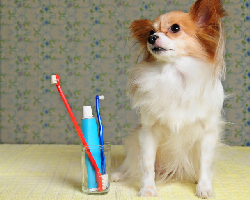
February is dental month! Although February has come and gone faster than I would have liked it to; I still wanted to share a post about the importance of dental care in your pet! Most owners do not realize that the mouth itself poses real threats to the health quality of their pet. Home oral care (brushing teeth, dental chews), beginning in the puppy and kitten stages and regular dental check ups with your veterinarian will ensure your pet has a healthy chomper!
4 Stages of Periodontal Disease
Click on the website/image to make it larger
(Thorpevet.com)

What is Periodontal Disease? 
Periodontal Disease begins and ends in the mouth. The gums become severely inflamed and sometimes can be very painful for your pet. The built up of plaque and tartar irritate the surrounding gum tissue and bone.

The components of Periodontal Disease.
Without plaque and tartar there would be no periodontal disease! Where does that plaque and tartar come from, you ask? Plaque is nasty bacteria that accumulates over time in your pets' mouth; it can affect the surrounding tissues and bone. The bacteria that is found in plaque can enter the bloodstream and cause internal organ damage. Tartar comes from your pets' salty saliva that "bonds" with the presenting plaque. After a few days on a not-so-clean surface, the tartar attaches itself to the tooth and can enhance plaque attachment. Tartar can be very hard to remove without the proper dental instruments.
Scaling teeth
(Website)

How do you remove the plaque/tartar?
When your pet presents for a dental, each clinic will have their protocol and will be sure to go over the paper work. Make sure you pay attention to what the doctor/technician is going over with you. Blood work, different anesthetics gases and pain medications are a few things that will be proposed to you because your pet will have to undergo general anesthesia. During a dental, we use a sonic scaler to go deep under the gums to ensure the best removal of the bacteria that is present. With your pet asleep, we can ensure to get in the crevices of their teeth. After scaling, the doctor will check for any periodontal pockets. A periodontal pocket is just an open pocket underneath the gum where bacteria can accumulate and cause infection. This is done with a simple tool that is placed around each tooth to ensure the pocket depth is normal (less than 2mm in depth). The last step is to polish the tooth to smooth out the rough surface the scaler has made. This is done just like at your dentist; with a loud, spinning "tooth brush" that is placed on each tooth to ensure a smooth and clean surface.


(Website)
What are the signs of Periodontal Disease?
"My pets' breath is horrible," is a common thing I hear as a tech. Bad breath is definitely a major sign that your pets' mouth is a nasty mess. Bleeding and redness of the gums are also a sign; this can cause pain, which can lead to your pet not eating or having a hard time eating. If your pet has severe periodontal disease, teeth that are loose or falling out can occur.

Can Periodontal Disease be prevented?
At home oral care will definitely help, but nothing can actually "prevent" periodontal disease. Brushing your pets' teeth, dental chews and dental rinses can certainly help. These products can all be found at your local veterinarian or pet store.

Is doing a dental on my pet really worth it?
(Website)
YES! Owners will laugh when I tell them that their pet may need to undergo a dental. Brushing a dog or cats' teeth is a fairly new concept in the veterinarian world. You don't think about teeth being all that important to internal organ health, but they certainly are! As stated before, the nasty bacteria that accumulates in your mouth can enter your pets' bloodstream and cause severe damage. This can all be prevented by simply having your pet undergo a thorough routine dental cleaning. Depending on your pet, dental cleanings may be performed every 6 months to a year. Your veterinarian will help you determine how often dental cleanings will need to be performed on your pet.

All of this seems like a lot I know, but in the end it will definitely benefit your pet! Here's proof in a picture!

Built up of plaque/tartar resulting in dental disease.
(VOHC)

After a routine dental cleaning!
What a difference it makes!
(VOHC)

I hope that you have enjoyed learning about the importance of animal dentistry. If you feel your pet needs a thorough dental examination, please don't hesitate to call Tenth Street Animal Hospital today! We have a wonderful "dental doctor" who knows all things relating to dental (and other important things, of course) and will treat your pet with gentle hands!

What do you want to hear about next? Talk to me on Facebook, let me know my blog sent you!

Here's to a tail waggin' day,

Noelle

*Information for this blog was obtained via: VOHC (this is a GREAT dental website), AVDC
*Pictures can be found at the websites provided in captions.

Sunday, March 1, 2015

Breed of the Month: Doberman Pinscher

The Doberman Pinscher is made of a square, muscular body; coming in various coat colors ranging from black, black and tan (most common) to red. A headstrong attitude is one of the many components that make up this wonderful dog!

Berlin, my uncles' Doberman!
She's colored with black and tan.
History: Developed by a German tax collector who wanted a medium-sized guard dog, the Doberman Pinscher breed was started around the 1860's. The Rottweiler, Greyhound, and German Short-haired Pointer are just a few of the breeds used to make the Doberman we know and love today.

(AKC)
Temperament: The Doberman Pinscher is a very headstrong and loyal dog. They thrive for human interaction. They are very loyal and affectionate, making them a wonderful family dog. However, the Doberman has a lot of energy and will need room to run. "They are not suitable for kennel or backyard life." (Dog Breed Info) A very active, loving and caring family would be best suitable for this breed. If not given the proper care and attention the Doberman can become aggressive. Socializing and setting boundaries are a must for this breed in order to avoid aggression.
Ms. Berlin!
She is 9 years old and very sweet!

Grooming: Luckily, the Doberman doesn't require a large amount of grooming. Occasional baths should suffice just to keep the coat nice and shiny. Cropping the ears (around 12 weeks of age) and docking their tails (no later than 3 days old) are personal preference and will be up to the breeder and/or owner.

Health Concerns: The most common health problem that the Doberman Pinscher is known for is Von Willebrands Disease. This is an inherited blood clotting disorder. Wobbler Syndrome ("fusion of the neck and compression of the spinal cord" (Dog Breed Info) cancer, hip dysplasia and skin issues are also other possible health problems that an owner may face. The life expectancy for the Doberman is around 12-14 years.
Ms. Maggie May! She is a
 co-worker's dog!
She is around 7 1/2 months old
and a very precious girl!

Did You Know? 
The Doberman Pinscher is a very good therapy dog, being very careful and aware of their surroundings.
This breed has been known to be very good in nursing home settings, because of it's tentative and careful nature.
The gene responsible for the "White Doberman" is also said to be the same gene that white lions and tigers are born with!

This breed is perfect if you're looking for an affectionate, caring and protective dog! I hope you have loved reading about this breed! If you are looking for a doberman, there are several websites that can give you just that! I will post on Facebook what breed will be featured next! If you have a breed you would like to read about, let me know!


Here's to a tail waggin' day!

-Noelle


*Information obtained for this blog came from the following sites: Dog Breed Info and AKC.org
*Pictures can be obtained from the websites provided.
*Owner's pictures have been approved by the owner and given permission to use.

Wednesday, December 31, 2014

To Spay or Not to Spay?

Spaying your pet is a big decision and an important one. I am not here to talk badly about the people that do not spay their pet but rather explain why the veterinary world recommend it.

Female Dog Anatomy
(Baywood Vet Hospital)
The Meaning of "Spay"
Understanding female anatomy is not a must in making a decision whether to spay or not but it will help you understand what "spaying" actually means. During this surgery the animals' uterus as well as the ovaries are completely removed by making a small incision just below the "belly button." The uterus is y-shaped (cats and dogs), so therefore this can be done fairly easy if there are no complications. The recommended age to do this procedure is between four to six months because this is before the female will go into her first heat cycle. Doing this before her first heat cycle occurs will greatly decrease the chance of mammary cancer (breast cancer).

Spaying Advantages
There are several benefits you and your pet will get from this procedure.

Mammary Tumor in a Dog
(Phys.org)
Mammary. Uterine and Ovarian Cancer
The main reason is the prevention of mammary cancer. The levels of estrogen (female hormone released during their heat cycle) will effect mammary development; therefore to decrease estrogen in the animals' body it is best to spay before the hormone can be released. As with people, breast cancer can be scary. The breast tumor can be taken off because it develops in the mammary gland but this doesn't mean that the cancer itself is gone; which is why this is hard to treat. Uterine and ovarian cancer can also develop if these organs aren't taking out.

Pyometra
Normal Uterus vs. Infected Uterus
(Marvista Vet)
Pyometra is also a big concern especially in older intact dogs. This is when there is an infection in the uterus caused by "hormone changes in the female reproductive tract." (VCA Hospitals) It normally occurs two to eight weeks after the female's last heat cycle. There are two types of pyometra: open or closed depending on the dilation of the cervix. Open cervix pyometra isn't as life threatening but still requires veterinary intervention. Strong antibiotics can be given but are not promised to treat the infection. Vaginal discharge, fever and lethargy are common signs of this type of pyometra. If it is a closed cervix pyometra the situation becomes life threatening and will more than likely need surgical intervention because the bacteria trapped in the uterus cannot escape as with open cervix pyometra. Dogs with this problem become sick very fast. Listlessness, vomiting, and anorexia are signs to look for in a closed cervix pyometra.

What Do I Do Once My Pet is Spayed?
Example of an E-Collar
(Pet Project Blog)
Most dogs and cats will do just fine post-operatively after a spay. Rest and leash walks with pain medications are the only things a doctor will prescribe. Rest and leash walks are to help ensure proper healing internally and at the incision site. Pain medications are to keep your pet comfortable until everything internally has healed. One thing to monitor your pet for is scratching, licking or irritating the incision site. This can cause unwanted infection. There are steps, such as an e-collar, you can take to ensure this doesn't happen.

(Bark Pouch)

There Are No Real Disadvantages
Many people believe that by spaying their pet, obesity and laziness will occur. This is false. Spaying your pet does not cause these problems. A nutritional consult with your veterinarian can help prevent obesity. Regulating and monitoring your pet's food intake is an easy way to prevent obesity.


This is a lot of information to take in, I know. I hope that you understand the importance of spaying your pet as it can increase it's health quality as well as possible life expectancy. If you have any questions or need further information on this topic, please don't hesitate to contact Tenth Street Animal Hospital and we will help you anyway we can!


Here's a tail waggin' day!

-Noelle

*Information for this post was obtained from: VCA Hospitals and TSAH handout.
*Pictures in this post can be found at the links provided.